Address of first cell in range
Generic formula
=ADDRESS(ROW(range),COLUMN(range))
Related formulas
Address of last cell in range
Total rows in range
Total columns in range
Total cells in a range
First row number in range
Get address of named range
Explanation
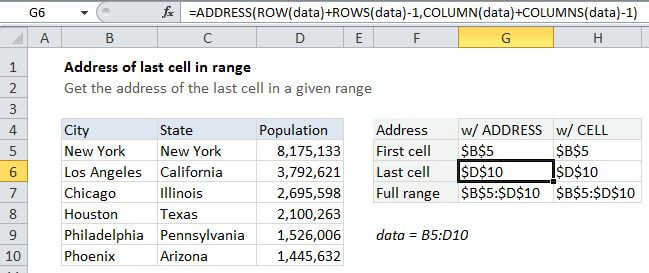
To get the address of the first cell in a named range, you can use the ADDRESS function together with the ROW and COLUMN functions.
In the example shown, the formula in G5 is:
=ADDRESS(ROW(data),COLUMN(data))
How this formula works
The ADDRESS function builds an address based on a row and column number.
Working from the inside out, the ROW function returns an array of absolute* row numbers for a given range, and the COLUMN function returns an array of column numbers.
The ADDRESS function then assembles and returns an array of addresses. When entered in a single cell, just the item from the array is displayed, which is the address corresponding to the first cell in a range.
* By absolute, I mean numbers that track to the entire worksheet, not numbers relative to the range itself.
CELL function alternative
You can also use the CELL function to get the address of the first cell in a range with this formula:
=CELL("address",data)
In this case, we just pass the range into the CELL function with "address", which returns the address of the first cell in the range.
Note that the the CELL function can be volatile. If you add it to a worksheet, you'll notice that you are prompted to save even when you've made no changes.